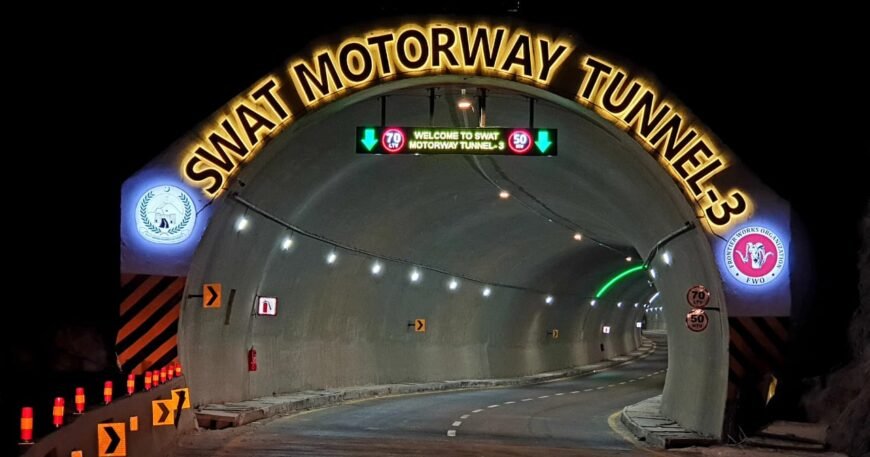
Pakistan’s infrastructure development programme is creating tunnels at a pace the country has never seen before. The Swat Motorway, Lowari Tunnel, and multiple CPEC route tunnels have brought tunnel engineering from a specialist niche to a mainstream infrastructure challenge for Pakistani civil and mechanical engineers. Yet among all the engineering systems a road tunnel requires, ventilation is the one most likely to be underestimated in scope and consequence.
A road tunnel without adequate ventilation is not simply uncomfortable — it is dangerous. Vehicle exhaust accumulates. Carbon monoxide builds to toxic levels. Visibility drops. In a fire emergency, smoke control becomes the difference between safe evacuation and catastrophic loss of life. Tunnel ventilation engineering addresses all of these hazards through a combination of continuous normal ventilation and emergency fire and smoke extraction capability.
Bilal Switchgear Engineering supplied and installed the ventilation system for the Swat Motorway Tunnel — one of Pakistan’s most significant road infrastructure projects — making BSE the only Pakistani engineering company with demonstrated, completed experience in road tunnel ventilation system delivery. This guide explains tunnel ventilation engineering in the depth relevant to Pakistani infrastructure projects, from design principles through equipment selection to emergency operation.
Why Road Tunnels Need Dedicated Ventilation Systems
An open road carries traffic in an effectively infinite volume of ambient air. Vehicle exhaust disperses immediately and concentrations of carbon monoxide, nitrogen dioxide, and particulates remain negligible. A road tunnel is the opposite — a closed, bounded space with fixed cross-sectional area where every vehicle exhaust emission accumulates until it is actively removed by the ventilation system. Without mechanical ventilation, a busy road tunnel rapidly develops dangerous concentrations of toxic gases and a thick haze of particulates that reduces visibility and threatens driver and passenger safety.
The design challenge is to maintain pollutant concentrations and visibility levels within safe limits for the entire range of traffic conditions the tunnel will experience — from free-flow at design speed through to stationary congestion, which is the worst-case scenario for pollutant accumulation. This requires not just adequate installed ventilation capacity, but a control system that monitors actual tunnel air quality continuously and adjusts ventilation operation to match real traffic conditions.
Pakistan context: Pakistan’s major road tunnels including the Swat Motorway Tunnel, Lowari Tunnel, and CPEC route tunnels serve mixed traffic including heavy diesel trucks, which generate significantly more nitrogen dioxide and particulates per vehicle than petrol cars. Tunnel ventilation design for Pakistani conditions must account for this high proportion of heavy diesel vehicles in the traffic mix, which increases the required ventilation rate compared to tunnels designed primarily for light vehicle traffic.
The Three Main Types of Road Tunnel Ventilation Systems
Longitudinal Ventilation with Jet Fans
Longitudinal ventilation is the most widely used tunnel ventilation system for single-tube road tunnels of moderate length. Jet fans mounted in the tunnel crown blow air longitudinally along the tunnel, creating a directed airflow that carries vehicle exhaust from the traffic entry portal to the exit portal where it disperses into the atmosphere. The jet fans work by entraining the large volume of tunnel air through the momentum of their high-velocity outlet jet — a single jet fan with a thrust of 1,000 N can move tens of thousands of cubic metres of air per hour through the entrainment effect on the surrounding tunnel air mass.
In normal operation, jet fans run continuously at low speed or cycle on and off to maintain pollutant concentrations below design limits. Traffic sensor data and CO/NO2 monitors throughout the tunnel length feed a SCADA-controlled ventilation management system that adjusts fan speed and the number of running fans to match actual tunnel air quality conditions. This variable operation significantly reduces energy consumption compared to fixed-speed systems running continuously at full output.
In a fire emergency, the jet fan system switches to smoke extraction mode. Fan direction may be reversed (most tunnel jet fans are reversible) to direct smoke toward the emergency exit end of the tunnel and maintain a clear evacuation path for road users moving away from the fire. The critical design parameter for emergency operation is achieving a longitudinal air velocity of at least 3 metres per second throughout the tunnel to prevent smoke from rolling back over evacuating road users against the airflow direction.
Transverse Ventilation Systems
Transverse ventilation supplies fresh air and extracts polluted air through dedicated duct systems running the length of the tunnel, with supply and exhaust outlets distributed at regular intervals along the tunnel walls or ceiling. Unlike longitudinal systems where air travels the full tunnel length from portal to portal, transverse systems achieve much shorter effective ventilation path lengths and more uniform air quality distribution along the tunnel.
Full transverse systems have both supply and exhaust ducts. Semi-transverse systems use either supply only or exhaust only, with the complementary airflow handled through the tunnel portals. Transverse systems are the standard specification for long tunnels (above approximately 3 km), tunnels with bidirectional traffic, and tunnels in urban areas where portal exhaust to the atmosphere is unacceptable due to proximity of residents or air quality regulations.
The major disadvantage of transverse systems is cost — the duct construction adds significantly to civil tunnel construction cost, and the supply and exhaust fan plant rooms at each end or at intermediate shaft locations require substantial civil infrastructure. For Pakistani infrastructure projects where tunnel length and traffic characteristics are compatible with longitudinal ventilation, the lower cost and simpler civil requirements of jet fan systems make them the standard choice.
Natural Ventilation
Short tunnels below approximately 200 to 300 metres with predominantly unidirectional traffic can rely on natural ventilation driven by the piston effect of moving vehicles and prevailing wind pressure differences between portals. Natural ventilation is not a designed active system but a consequence of tunnel geometry and traffic characteristics. For any Pakistani road tunnel above 300 metres or with significant bidirectional traffic or heavy vehicle proportion, mechanical ventilation is required regardless of how the initial assessment might appear to favor natural means.
Jet Fans: The Core Equipment of Longitudinal Tunnel Ventilation
Jet fans are the primary mechanical equipment in longitudinal tunnel ventilation systems. Understanding jet fan selection and installation requirements is essential for specifying tunnel ventilation systems for Pakistani road infrastructure projects.
How Jet Fans Work
A jet fan is a high-speed axial fan with a cylindrical casing that accelerates air to velocities of 20 to 35 metres per second at its outlet. This high-velocity jet entrains the surrounding tunnel air through momentum transfer, driving a much larger volume of air longitudinally along the tunnel than the fan itself handles directly. A jet fan handling 20 m3/s of air at its inlet can drive 200 to 400 m3/s of total tunnel airflow through entrainment — an amplification factor of 10 to 20 times. This entrainment efficiency is what makes jet fan systems viable for tunnel ventilation without requiring ductwork.
Thrust Rating and Selection
Jet fan capacity is specified in Newtons of thrust rather than airflow volume, because thrust (the force applied to the tunnel air mass) is the parameter that determines the fan’s ability to overcome the pressure resistance of the tunnel against the desired airflow. Required total thrust for a tunnel ventilation system is calculated from the tunnel geometry (length, cross-section, roughness), the design traffic volume and vehicle speed, and the target airflow velocity. For typical Pakistani road tunnels, individual jet fan thrusts of 600 N to 1,500 N are commonly specified, with multiple fans arranged in groups along the tunnel length to achieve the required total thrust.
Reversibility and Emergency Operation
Tunnel jet fans are almost universally specified as reversible — capable of running in either airflow direction by reversing motor rotation or using variable pitch impeller blades. Reversibility is essential for emergency fire and smoke management, where the required airflow direction may be opposite to the normal traffic flow direction depending on the location of the fire relative to emergency exit facilities. Reversible jet fans have slightly lower efficiency than fixed-direction fans but the operational flexibility for emergency management justifies this in virtually all tunnel applications.
Environmental Rating for Tunnel Installation
Jet fans installed in road tunnels are exposed to vehicle exhaust corrosives, high humidity, vibration from heavy vehicles, and elevated temperatures in fire events. Tunnel jet fans must be rated for continuous operation in these conditions with a minimum service life of 20 to 25 years. Motor protection class IP55 minimum is standard for tunnel jet fans in Pakistan. Impeller and casing materials must resist the corrosive effects of exhaust gases including sulphur compounds and nitrogen oxides. Fire-rated variants capable of continuous operation at 250 degrees Celsius or 400 degrees Celsius for 90 or 120 minutes are specified for emergency smoke extraction duties.
Tunnel Air Quality Monitoring and SCADA Control
A tunnel ventilation system is only as effective as its control strategy. Modern tunnel ventilation systems in Pakistan and internationally operate under SCADA control that integrates air quality measurement, traffic monitoring, fan status, and emergency detection to maintain safe tunnel conditions automatically without continuous human intervention.
- Carbon monoxide (CO) monitors: installed at intervals of 100 to 200 metres along the tunnel, providing continuous measurement of CO concentration. When CO exceeds the design threshold (typically 50 to 100 ppm for normal operation), the SCADA system increases ventilation fan speed or activates additional fans to restore safe levels
- Visibility sensors (opacimeters): measure the extinction coefficient of tunnel air, which reflects the concentration of particulates from diesel exhaust and indicates visibility conditions for drivers. Visibility degradation triggers increased ventilation before CO limits are reached in diesel-heavy traffic conditions
- Traffic counters and classifiers: measure vehicle volume and composition (car, light commercial, heavy truck) to allow predictive control that anticipates pollutant generation before measured air quality deteriorates
- Fire and smoke detectors: linear heat detection or video-based fire detection triggers immediate transition to emergency smoke extraction mode, reversing or redirecting fan operation to achieve controlled smoke management
- Portal wind sensors: measure external wind speed and direction at tunnel portals to account for natural ventilation contribution (positive or negative) in the fan control algorithm
The Swat Motorway Tunnel: BSE’s Reference Project
The Swat Motorway is one of Pakistan’s most significant recent road infrastructure investments, connecting Peshawar to Swat and providing a high-quality road link to the Malakand Division. The motorway includes tunnel sections that required dedicated mechanical ventilation systems designed for Pakistan’s traffic characteristics, high proportion of heavy vehicles on mountain roads, and the environmental conditions of the Malakand region.
Bilal Switchgear Engineering supplied and installed the tunnel ventilation fans and associated electrical systems for the Swat Motorway Tunnel as part of the project’s mechanical and electrical infrastructure. The project involved selection of jet fans rated for the specific tunnel geometry and traffic demand, electrical distribution systems for fan power supply, SCADA integration for automated ventilation control, and commissioning and testing of the complete system under simulated traffic load conditions. The Swat Motorway Tunnel project remains the benchmark for tunnel ventilation delivery in Pakistan’s civil infrastructure sector.
Our Ventilation Division carries the engineering expertise and project experience developed on the Swat Motorway to new tunnel ventilation projects across Pakistan’s expanding road infrastructure programme. Our tunnel fan product range covers the full spectrum of thrust ratings required for Pakistani road tunnel applications.
Tunnel Ventilation Design Process for Pakistani Projects
Step 1: Traffic and Pollutant Load Analysis
Determine the design traffic volume (vehicles per hour per direction), vehicle composition (percentage of heavy vehicles), design speed, and gradient. Calculate the total CO and NO2 generation rate from the traffic load using emission factors for the Pakistani vehicle fleet.
Step 2: Ventilation Rate Calculation
Calculate the minimum airflow required to dilute the design pollutant generation rate to below the maximum permitted concentrations (CO below 100 ppm under PIARC guideline, visibility above the minimum extinction coefficient limit) using the PIARC tunnel ventilation guidelines as the primary reference document.
Step 3: Jet Fan Thrust Calculation
Calculate the total jet fan thrust required to achieve the design airflow velocity against the tunnel’s aerodynamic resistance. This calculation accounts for tunnel length, cross-sectional area, wall roughness, portal pressure differences from external wind, and the traffic piston effect from vehicles moving through the tunnel.
Step 4: Fan Selection and Layout
Select individual jet fan thrust rating and determine the number and spacing of fans required to achieve the calculated total thrust, distributed appropriately along the tunnel length. Verify that the selected fans meet the environmental rating requirements for the specific tunnel installation conditions.
Step 5: Emergency Smoke Control Verification
Verify that the installed jet fan system can achieve the critical velocity (minimum 3 m/s) required to prevent smoke back layering in the worst-case fire scenario, using computational fluid dynamics (CFD) simulation or validated analytical methods for the specific tunnel geometry.
Tunnel Ventilation for Pakistan’s Infrastructure Programme
Pakistan’s road infrastructure programme is entering a period of sustained investment in tunnels that will require mechanical ventilation systems engineered specifically for Pakistani traffic characteristics, vehicle fleet composition, and environmental conditions. The engineering disciplines involved — aerodynamics, air quality modelling, fire and smoke management, SCADA control, and high-reliability electrical systems — require experienced project delivery that goes well beyond standard building HVAC or industrial ventilation work.
Bilal Switchgear Engineering brings the direct tunnel ventilation project experience from the Swat Motorway Tunnel delivery to new road infrastructure projects across Pakistan. Our engineering team covers jet fan selection and supply, electrical distribution system design, SCADA integration, installation supervision, and commissioning for complete tunnel ventilation systems. For a full view of our ventilation engineering capabilities including both tunnel and industrial ventilation systems, visit our Ventilation Division page.
Contact our engineering team to discuss tunnel ventilation requirements for your infrastructure project, request a preliminary ventilation assessment, or obtain a formal proposal for tunnel fan supply and installation.
Frequently Asked Questions
What is a tunnel ventilation system and why is it required?
A tunnel ventilation system is a mechanical system of fans, ducts, sensors, and controls designed to maintain safe air quality inside a road or rail tunnel. It dilutes vehicle exhaust pollutants including carbon monoxide and nitrogen dioxide to below safe concentration limits, maintains visibility above minimum safe thresholds, and in emergency conditions extracts smoke from a tunnel fire to allow safe evacuation of road users. Tunnels above approximately 300 metres in length or carrying significant heavy vehicle traffic require mechanical ventilation because natural air movement is insufficient to maintain safe conditions under design traffic loads.
What is a jet fan and how is it used in tunnel ventilation?
A jet fan is a high-speed axial fan mounted in the tunnel crown that accelerates a relatively small volume of air to high velocity (20 to 35 m/s) and uses the momentum of this high-velocity jet to entrain and accelerate the much larger surrounding volume of tunnel air. A single jet fan can drive 10 to 20 times its own airflow volume through entrainment. Multiple jet fans arranged along the tunnel length create a combined longitudinal airflow that carries vehicle exhaust from the traffic inlet end to the exit portal. Jet fans are reversible for emergency smoke extraction and are rated for continuous operation in corrosive, high-humidity tunnel environments with IP55 motor protection minimum.
What is the difference between longitudinal and transverse tunnel ventilation?
Longitudinal ventilation moves air along the tunnel length from portal to portal using jet fans, concentrating pollutant removal at the exhaust portal. It is the standard system for single-tube tunnels up to approximately 3 km with unidirectional traffic and is lower in civil construction cost. Transverse ventilation supplies fresh air and extracts polluted air through dedicated duct systems distributed along the tunnel, achieving shorter effective ventilation path lengths and more uniform air quality. Transverse systems are specified for long tunnels, bidirectional traffic tunnels, and urban tunnels where portal exhaust to atmosphere is not acceptable.
What air quality limits apply to road tunnels in Pakistan?
Pakistan’s road tunnel design practice follows PIARC (World Road Association) guidelines as the primary international reference. PIARC specifies a maximum CO concentration of 100 ppm for normal operating conditions and 250 ppm as a maximum for short-duration congested conditions where ventilation cannot maintain the normal limit. Visibility is measured by the extinction coefficient of tunnel air, with a maximum of 0.005 per metre for normal conditions. NO2 limits are also applied for tunnels with significant diesel traffic, with PIARC recommending a maximum of 1 ppm for continuous exposure. Actual design limits for specific projects may be set by the project specification or environmental assessment requirements.
How is emergency smoke extraction handled in a Pakistani road tunnel?
Emergency smoke extraction in longitudinal ventilation tunnels uses the reversibility of the installed jet fans to create a controlled longitudinal airflow that directs smoke away from evacuating road users and toward the tunnel portal remote from the fire. The minimum airflow velocity required to prevent smoke rollback against the ventilation direction is the critical velocity, typically 1.5 to 3.5 metres per second depending on the fire heat release rate and tunnel geometry. The SCADA ventilation control system detects a fire event through fire detectors or operator input and immediately switches fan operation from normal ventilation mode to the pre-programmed emergency smoke extraction sequence for the detected fire location.