In today’s world, industries depend entirely on uninterrupted electrical power to maintain production, protect assets, and ensure continuity of supply. That is why in manufacturing plants, processing facilities, commercial buildings, and data centers, everything is connected to a complex electrical system, and it should be well maintained and operated safely. A minor inconvenience or failure can lead to production losses, equipment damage, and significant financial losses.
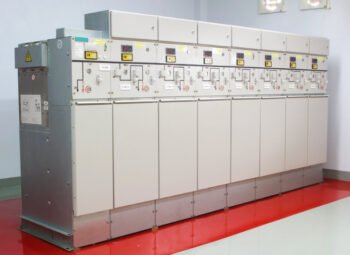
Here is an industrial switchgear panel playing a main role. Such systems are designed to provide protection, control, power, and isolation for electrical circuits while ensuring safe, reliable power distribution. A combination of advanced protection technologies, intelligent monitoring, and the fault-isolation capabilities of the switchgear panel helps prevent costly electrical failures.
As businesses continue to grow in automation, digital infrastructure, and industrial power management, the importance of electrical equipment protection is increasingly recognized. The modern switchgear solution is no doubt the most important component of a safe, efficient, and reliable power distribution system.
Why Electrical Failures are Critical for Industrial Businesses
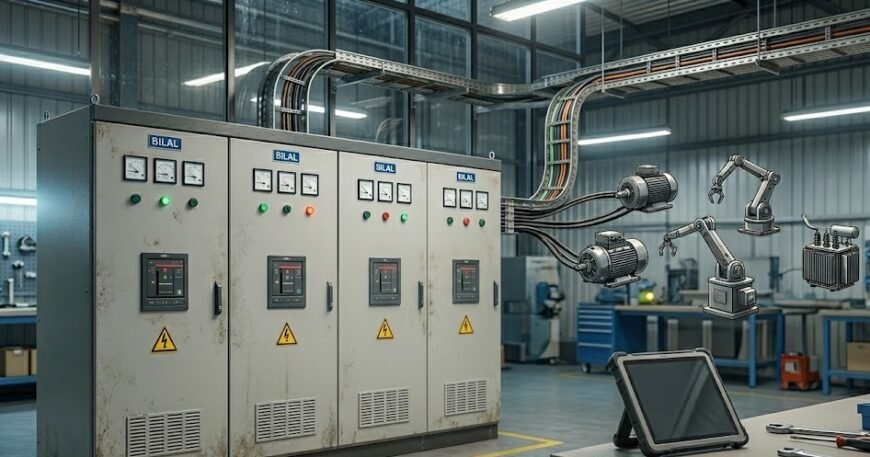
Electrical failures are considered expensive, destructive events when they occur in industrial facilities. A minor fault can affect multiple systems simultaneously, resulting in equipment shutdown, damaged machinery, and production delays. Many industries depend on equipment such as motors, drivers, transformers, PLC systems, automation networks, and production machinery.
When abnormal conditions occur, such as overload, short circuits, or voltage fluctuations, the equipment suffers more and ultimately affects the operations. The financial effect of the electrical failure often extends beyond the repair cost. Here are some of the businesses that are also experiencing the potential consequences:
| Impact Area | Potential Consequence |
| Production | Unplanned downtime and the lost output |
| Equipment | Damage to motors, transformers and the machinery |
| Safety | Increased risk of electrical accidents |
| Maintenance | Higher repair and replacement costs |
| Operations | Delays in manufacturing and project schedules |
| Revenue | Reduction in productivity and profitability |
Common Electrical Failures that Damage Industrial Equipment
The industrial electrical system has numerous risks during normal operations. Here are some of the common switchgear panel failures highlighted, showing why electrical fault protection is essential:
- Short Circuit: A short circuit occurs when the electrical current takes an unintended path with very low resistance. The entire pattern produces extremely high fault currents and damages equipment within milliseconds. When there is no protection, short circuits occur, resulting in burned conductors, equipment damage, arc flash incidents, and production shutdowns.
- Overloading: Overloading may occur when the equipment draws more current than its rated capacity for an extended period. The common causes included excessive mechanical loading, incorrect equipment sizing, process abnormalities, and system expansion without upgrades. Overloading generates excessive heat that damages insulation, motors, transformers, and cables.
- Earth Faults: Earth faults occur unintentionally when current flows to ground due to insulation failure, moisture ingress, or damaged wiring. The faults can be hazardous and can also damage sensitive electrical equipment.
- Voltage fluctuations: Unstable voltage can adversely affect motors, automation systems, and PLSs. There are many consequences of this, such as reduced equipment lifespan. Unexpected shutdowns, process instability, and increased maintenance requirements.
Fault Isolation and Equipment Protection
Fault isolation and equipment protection are two of the most important functions of switchgear panels. In many large industrial facilities, a single electrical fault can quickly spread through interconnected systems. If the system is not isolated quickly, then it can cause severe damage. The result is widespread equipment damage: production interruptions and costly downtime.
There are many switchgear panels designed to identify the exact location of the fault and disconnect only the affected section of the system. The selective isolation is helpful, as it maintains the power supply and also prevents damage to the critical equipment.
| Protection Functions | Benefits |
| Selective Tripping | Limits the disruption to affected areas only |
| Equipment Protection | Prevention of damage to motors and transformers |
| System Stability | Maintains the operation of healthy circuits. |
| Reducing Downtime | Faster restoration of power |
| Improved Safety | Minimizes the electrical hazards |
How Smart Switchgear Panel Prevents Unexpected Downtime
The old, traditional switchgear systems respond to faults only after they occur. Compared to modern smart switchgear panels, which actively monitor electrical conditions and provide early warnings before equipment fails or develops issues. The smart switchgear panels use intelligent sensors and digital monitoring technologies to collect operational data continuously. The maintenance teams also use this information to identify abnormal trends, investigate potential issues, and schedule corrective actions before the equipment is affected.
The key smart switch capabilities include real-time monitoring, equipment health assessment, load trend analysis, fault prediction, alarm management, event recording, and performance diagnostics. These capabilities are helpful for the business shift from reactive maintenance to predictive maintenance; they also significantly reduce the risk of downtime.
SCADA Integration and Real-Time Monitoring
Modern digital switchgear solutions are increasingly integrated with SCADA (Supervisory Control and Data Acquisition) systems to improve operational visibility and control. SCADA integration allows the operators to monitor the switchgear panel performance remotely from a centralized location. Depending solely on manual inspection, the maintenance teams also access real-time information about equipment status, alarms, load conditions, and fault events.
The benefits of SCADA-integrated switchgear panels include the following:
- Remote equipment monitoring
- Faster fault identification
- Iumpovef maintenance planning
- Better operational control
- Reduction in response time enhanced data analysis
Conclusion
Electrical failures are undoubtedly a threat to industrial operations and lead to equipment damage, production downtime, safety risks, and unexpected financial losses. Industrial facilities are becoming more dependent on automation, digital systems, and continuous production processes. The need for reliable electrical production has become important.
Modern switchgear panels serve as the first line of defense against these risks by detecting faults, isolating affected circuits, protecting equipment, and maintaining stable power distribution. The features, such as fault isolation, equipment protection, smart monitoring, and SCADA integration, enable businesses to identify potential issues rapidly and also respond quickly.
FAQs
How do switchgear panels protect industrial equipment?
The smart switchgear panels protect industrial equipment by detecting electrical faults such as overloads, short circuits, and earth faults. Then isolate the affected circuits before the damage can spread to the machinery connected.
What are the most common electrical failures in industrial facilities?
The common electrical failures include short circuits, overloads, earth faults, voltage fluctuations, and equipment overheating. These issues cause downtime and damage to expensive equipment if not properly managed.
Why are smart switchgear panels becoming popular?
The smart switchgear panels provide real-time monitoring, predictive maintenance, remote diagnostics, and improved adult detection capability. These features help businesses to reduce downtime and improve operational reliability.
What role does SCADA play in switchgear systems?
SCADA enables the remote monitoring and control of switchgear systems. It provides real-time data, alarm management, fault analysis, and operational insights. It helps to improve the maintenance planning and system performance.
Which industries benefit most from modern switchgear panels?
Manufacturing plants, oil and gas facilities, hospitals, data centers, commercial buildings, utilities, and infrastructure projects benefit from the enhanced protection and reliability offered by modern switchgear panels.