
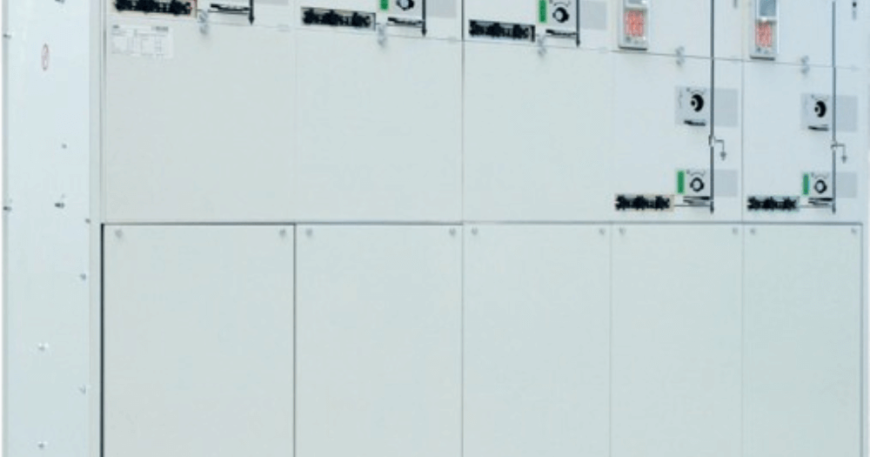
With the increase in power demand across various industries, commercial developments, and infrastructure projects, a reliable medium voltage distribution network has become essential. The electrical interruption can cause production losses, equipment damage, operational downtime, and major financial consequences. Here are the utilities and the industrial facilities that are investing more in smarter and more power-efficient distribution systems.
The most effective technology used in the modern power networks is the Ring Main Unit (RMU). It is designed to improve network continuity, fault isolation, and operational flexibility. The RMU has become a critical component of medium-voltage power distribution systems: the compact design, advanced protection, and ability to support automation.
Why Network Reliability has Become a Critical Utility Priority
The electricity consumers expected that there should be a proper, uninterrupted power supply regardless of whether they operate a hospital, commercial building, factory, or residential society. There should not be short-duration outrages, as they can affect the schedules, disrupt the essential services, and also increase the operational cost.
The modern utilities face many challenges, including an impact on reliability, such as the growing electricity demand, expanding urban infrastructure, aging electrical networks, increased renewable energy integration, and higher expectations for the power quality. In order to address these challenges, the power distribution companies are also modernizing their networks with advanced medium voltage switchgear panels and intelligent distribution equipment that can isolate the faults instantly and maintain service continuity.
Understanding Ring Main Units (RMU): The Backbone of Modern Distribution Networks
A Ring Main Unit (RMU) is a compact, enclosed medium-voltage switchgear panel assembly designed specifically for the safe control, protection, and isolation of electrical distribution circuits. The RMUs are commonly installed within the ring distribution networks where there are multiple power paths that ensure a safe and reliable supply of electricity.
As compared to the traditional radial distribution systems that rely on a single power source, ring networks allow the electricity to reach the consumers through various alternative routes if any fault occurs. The RMU system also serves as the control point that enables the operators to manage the power flow efficiently and safely.
The reliability and compact footprint of the RMU make it widely used in many urban power networks, industrial facilities, renewable energy projects, and utility substations. The primary function of the RMU includes the following:
- Switching operations
- Network protection
- Fault isolation
- Load management
- Distribution network control
How Ring Main Units (RMU) Keep Power Flowing During Network Disturbances
One of the best features of the RMU is its ability to maintain network continuity whenever there is any fault occurrence in many conventional systems. The fault can often interrupt the power to large sections of the network. The RMUs minimize the impact by isolating the only affected section while allowing the healthy sections to remain energized.
Here is a table showing the type of RMU fault management process that the RMU performs and its functionality:
| Stage | RMU Function |
| Fault Detection | Identifies abnormal network conditions |
| Circuit Isolation | Disconnects affected sections |
| Alternative Supply Path | Maintain power through the ring network |
| System Protection | Prevents fault propagation |
| Service Restoration | Enables the fault recovery |
Inside a RMU Panel: Key Components that Ensure Reliable Operation
The modern RMU switchgear combines several components within a compact and secure enclosure. Every component plays a specific role in maintaining a better network with safety and reliability.
- Load Break Switches: The load break switches help the operators to safely open and close the circuits under normal load conditions. Such switches are important for the routine network operations and the maintenance activities.
- Circuit Breakers: The circuit breaker provides automatic fault protection by interrupting fault current whenever there is any abnormal activity or fault occurrence. There are many modern RMUs that use the vacuum circuit breaker technology because of their reliability and the low maintenance requirements.
- Protection Relays: The protection relays are the best for continuous monitoring of the electrical parameters and trigger circuit breaker operations whenever there is any fault detection.
- Cable Compartments: The cable compartments help to provide secure termination points for incoming and outgoing medium-voltage cables, also making sure that the operator is safe.
- Busbar System: The busbar system connects the different switching devices and the facilities’ power flow through the RMU. When these are combined, they create a reliable and efficient distribution network protection solution.
Ring Main Units (RMU) vs. Conventional Switchgear: Which Performs Better?
Whenever one is planning the medium-voltage distribution network, the engineers often have a comparison with the Ring Main Units (RMUs) and the conventional switchgear systems. As both of them perform the switching and the protection functions, their design philosophy and operational benefits may differ significantly.
The conventional switchgear panels are widely used in large substations and industrial facilities where there are multiple feeders and complex protection schemes needed. And RMUs are specifically designed for the compact, reliable, and decentralized power distribution system. The RMU is famous, as it has the ability to provide reliable network protection within a smaller footprint.
| Feature | Ring Main Units (RMU) | Conventional Switchgear |
| Installation Space | Compact | Large Footprint |
| Network Reliability | High | Good |
| Fault Isolation | Fast | Moderate |
| Maintenance Requirements | Low | Higher |
| Installation Time | Faster | Longer |
| Network Flexibility | Excellent | Moderate |
| Urban Applications | High Suitable | Limited |
| Initial Investment | Moderate | Higher for similar application |
Future of Ring Main Units (RMU) in Medium Voltage Distribution Networks
The future of the Ring Main Units (RMUs) is very closely connected to the ongoing transformation of the electrical distribution network. They are smarter, more automated, and highly reliable. The power demand continues to grow, and there comes the integration of renewable energy sources into the grid. The modern RMUs are not only limited to the switching and the protection functions; they have become more intelligent assets within the broader smart grid ecosystem.
The utilities and the industrial operators are also investing in the smart RMU switchgear that is well-equipped with the advanced communication capabilities, real-time monitoring systems and the automated fault management features. These techniques also help the operators to remotely monitor the network conditions, identify the faults instantly, and also restore the power in a quicker way than conventional systems.
| Technology | Role in Future RMUs | Key Benefit |
| Smart Grid Integration | Connects RMUs to intelligent power networks | Improved network reliability |
| SCADA Integration | Enables the remote monitoring and control | Faster fault response |
| IoT Sensors | Provides the real-time equipment data | Better asset visibility |
| Predictive Maintenance | Detects issues before failure occurs | Reduction in downtime |
| Digital Substations | Supports advanced communication systems | Improved operational efficiency |
| AI-Based Diagnostics | Analyzed network conditions automatically | Fast decision-making |
| Renewable Energy Integration | Supports solar and power connections | Enhanced grid flexibility |
| Distribution Automation | Automated switching and restoration processes | Reduction in outage duration |
Conclusion
Ring Main Units (RMUs) have become the essential component of modern medium voltage distribution networks because they provide reliable switching, fault isolation, and network protection. Because of their ability to maintain power continuity during network disturbances, they are valuable for industries, utilities, and critical infrastructure projects.
As the electrical network continues to evolve around smart grids, digital substations, and renewable energy integration, the role of the RMU panels will become more essential. So with the combination of advanced protection, automation capabilities, and intelligent optimization, RMS helps create a safe and future-ready power distribution system that supports the demands of modern energy infrastructure.
FAQs
What is a Ring Main Unit (RMU)?
The ring main unit is a compact medium-voltage switchgear system used to control, protect, and isolate the electrical distribution networks while maintaining power supply continuity.
Where are RMUs commonly used?
The RMU is used in utility distribution systems, industrial facilities, renewable energy projects, commercial developments, hospitals, airports, and underground cable networks.
Can RMUs be integrated with the SCADA systems?
The modern RMUs support the SCADA integration, enabling remote monitoring, auto detection, switching operations, and network management.
What is the difference between an RMU and conventional switchgear?
The RMUS are more compact, need less maintenance, and are specifically designed for reliable distribution networks. In the case of the conventional switchgear, it is often used for large and more complex substation applications.
Why are RMUs important in medium voltage distribution networks?
The RMUs improve the network reliability by enabling rapid fault isolation and allowing the power to flow through the alternate within a ring network.

