As Pakistan’s infrastructure expands with each passing day, the demand for reliable and safe electrical equipment is also increasing. The power generation facilities, transmission networks, substations, and infrastructure developments require switchgear systems that meet technical and operational standards. This is where the WAPDA and NTDC switchgear panels come into play.
In utility projects and large-scale installations, switchgear is not merely a power distribution component; it also plays a vital role in protection, with the control system responsible for fault isolation, equipment protection, and network reliability. The use of NTDC-approved switchgear panels and a utility-compliant electrical system helps ensure that the infrastructure performs reliably under demanding conditions.
The article helps you understand the key technical requirements, compliance considerations, applications, benefits, and selection factors for WAPDA-approved switchgear panels in Pakistan.
Understanding WAPDA and NTDC Approved Switchgear Panels
The WAPDA and the current NTDC-approved switchgear panels are also referred to as switchgear systems that comply with utility specifications, project requirements, technical standards, and procurement criteria established for specific power sector applications.
In Pakistan, utility infrastructure requires electrical equipment that meets performance, safety, and reliability expectations. The switchgear panels used in transmission networks, substations, and utility projects must operate safely under normal conditions. The word compliance usually refers to meeting relevant standards, technical specifications, testing requirements, and quality assurance procedures applicable to the intended projects. Let me know if there is anything else I can help you with.
Why Utility-Complaint Switchgear Panel is Important
The electrical infrastructure requires equipment that can operate reliably for years while maintaining safety and protection performance. The utility-complaint switchgear panel is essential, as it helps in the following ways:
- Improved electrical system reliability
- Enhanced fault protection capability
- Probation of expensive infrastructure assets
- Support safe operations
- Reduction in outage risk
- Improvement in maintenance efficiency
- Increased operational confidence
- Support in the regulatory and project compliance
As the transmission and distribution systems are critical national infrastructure, the equipment quality cannot be compromised.
Key Features of WAPDA and NTDC Approved Switchgear Panels
Utility-grade switchgear systems are designed to operate in demanding environments while maintaining high levels of safety and performance. Here are characteristics that should be included:
- High-Fault Withstand Capacity: The switchgear panels installed in utility networks must withstand significant fault currents without compromising safety. The robust fault protection capability safeguards equipment and personnel during abnormal operating conditions.
- Reliable protection systems: Modern utility switchgear panels incorporate the advanced protection technologies designed to detect and isolate the faults. The common protection functions include overcurrent protection, earth-fault protection, differential protection, distance protection, breaker-failure protection, and voltage protection. The faster the default isolation, the less damage and service disruption there is.
- Type-Tested Construction: Type testing helps verify the switchgear’s performance under specific operating and fault conditions. Testing helps confirm thermal performance, dielectric strength, short-circuit withstand capability, mechanical endurance, and protection system functionality. This whole procedure helps to improve confidence in long-term reliability.
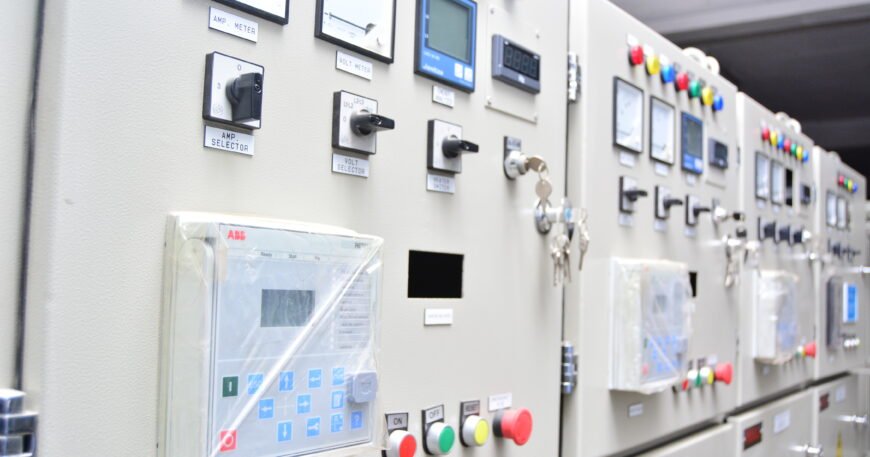
- Advanced Monitoring Capabilities: The modern switchgear panels help support digital monitoring and automation. The capabilities include remote monitoring, event logging, alarm management, SCADA integration, asset performance tracking, and predictive maintenance support.
Types of Switchgear Panels Used in Utility Infrastructure
Different utility applications require different switchgear technologies. Here are the types of switchgear panels that are used in utility infrastructure:
| Switchgear Panel Types | Common Applications | Key Advantages | Installation Areas |
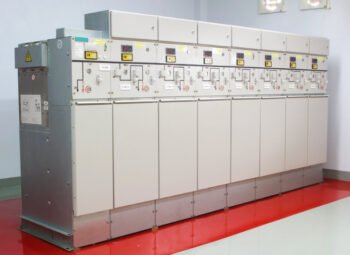
| Medium Voltage Switchgear Panel (MV) | Power distribution networks, feeder protection, transformer control, industrial facilities and substations | Helps in high operations flexibility, reliable fault protection, and efficient power distribution | Industrial plants, distribution substations, and infrastructure projects |
| High Voltage Switchgear Panel (HV) | Transmission networks, utility substations, grid interconnections, and high-capacity power systems | Support large power loads, improve grid stability and ensure reliable transmission operations | Transmission substations, a utility grid infrastructure |
| Gas Insulated Switchgear Panel (GIS) | Space-constrained projects, offshore facilities, underground installation and urban substations | Compact designs, high reliability, reduced environmental exposure, and lower maintenance requirements. | Metropolitan areas, industrial zones and offshore platforms |
| Air Insulated Switchgear Panels (AIS) | Conventional substations. Industrial power systems and utility projects | Lower maintenance cost, easier maintenance access, proven long-term performance | Outdoor substations, utility facilities and industrial complexes |
Technical Standards and Compliance Considerations
In evaluating the WAPDA- and NTDC-approved switchgear panel solution, compliance with recognized standards is important. Here are some considerations that are included:
| Evaluation Area | Importance |
| IEC Compliance | Helps to ensure internationally recognized performance requirements |
| Protection Coordination | Improves fault management effectiveness |
| Type Testing | Helps to confirm the equipment capabilities under specified conditions |
| Quality Control | Helps to enhance the manufacturing consistency |
| Documentation Support | Helps to simplify the installation and maintenance |
| Safety Features | Protects the personnel and equipment |
| Factory Acceptance Testing | Helps to verify operational readiness |
Benefits of Utility-Grade Switchgear Panels
Organizations investing in utility-approved solar panels can gain several long-term advantages.
- Improved Reliability: The high-quality switchgear panels help to reduce the likelihood of unexpected failures and service interruptions. The strong and reliable infrastructure supports the operational continuity.
- Enhanced Safety: The high-quality switchgear panels help to reduce the likelihood of unexpected failures and service interruptions.
- Lower Lifecycle Costs: Because the premium switchgear panel requires a higher initial investment, improved reliability and reduced maintenance often help lower the long-term ownership cost. The lifecycle value is often more important than the purchase price alone.
- Better Asset Protection: Utility-grade protection helps protect transformers, feeders, cables, and other expensive infrastructure assets. This helps reduce the replacement and repair costs.
Choosing a Future-Ready Switchgear Manufacturer in Pakistan
Selecting the right switchgear panel manufacturer involves comparing delivery schedules. The business should look for manufacturers with proven engineering expertise, advanced manufacturing capabilities, and testing infrastructure projects. Reliable manufacturers not only supply the equipment but also provide technical guidance throughout the design, installation, testing, commissioning, and maintenance phases.
As Pakistan’s electrical sector continues to modernize, choosing a manufacturer that embraces innovation is essential. The future-ready switchgear panel solutions help incorporate digital monitoring, automation, predictive maintenance, and smart grid compatibility to improve operational efficiency and long-term reliability. Manufacturers investing in modern technologies are better positioned to support the evolving needs of industry, utilities, and infrastructure development. Buyers should consider the following factors when evaluating switchgear panel manufacturers:
| Evaluation Criteria | Importance |
| Engineering Capability | Ensure that the technical soundness and the customized solutions are |
| Manufacturing Facilities | Helps to reflect the production quality and scalability |
| Testing Infrastructure | Verifies the product reliability and compliance |
| Utility Project Experience | Demonstrates capability in critical power projects |
| Documentation Quality | Helps to support the operations, maintenance, and compliance requirements |
| Warranty and After-Sales Service | Helps to ensure the long-term operational supports |
| Digital Monitoring Expertise | Support smart switchgear panels and remote diagnostics. |
Conclusion
The electrical infrastructure is becoming more complex and also demands reliable power. The importance of the high-quality switchgear panels cannot be overstated. The utility-compliant switchgear panels provide protection, control, and operational reliability. The selection of technically sound solutions, experienced manufacturers, and organizations can strengthen electrical safety, improve safety performance, and support long-term infrastructure development.
The WAPDA and NTDC-approved switchgear panels remain a critical component of reliable power distribution. One should invest in a well-engineered switchgear panel system, as it creates safer, more dependable, and future-ready electrical systems.
FAQs
- What are WAPDA and NTDC-approved switchgear panels?
WAPDA-approved and NTDC-approved switchgear panels are protective and distributive electrical systems certified for use in utility and major infrastructure projects in Pakistan.
- Why is utility-compliant switchgear important for industrial projects?
Utility-compliant switchgear provides high electrical safety, reliability, and fault protection for the system. This also ensures that the operation of the transformers, feeders, and substations is carried out without interruption or damage to any equipment.
- What should businesses consider when selecting a switchgear manufacturer in Pakistan?
A manufacturer’s engineering skills, supported by testing, fabrication, and assembly facilities, and quality-controlled in conformity with standards, together with significant experience in the field and the provision of adequate maintenance services, must be considered.
- What are the future trends in utility switchgear technology?
Modern utility switchgear is undergoing development to include digitization and smart solutions that can integrate with or support SCADA systems, predictive maintenance, remote monitoring, and adaptive protection, as well as the integration of renewables. Such developments are expected to address the challenges of maintaining system reliability and the power network’s performance.