The smart switchgear panels are revolutionizing the industry by eliminating reliance on manual control systems and outdated electrical setups. In many factories, commercial buildings, and industrial facilities, the electrical systems are becoming faster, smarter, and more efficient. Here, the PLC-based smart switchgear panels make a huge difference.
The old traditional switchgear panels have been the essential part of the electrical protection and power distribution for many years. They are used to manage switching operations, protect equipment, and maintain electrical safety. As industrial operations become more advanced, traditional switchgear panels no longer fulfil the automation and smart control business needs. Adding the Programmable Logic Controller (PLC) to the smart switchgear panels makes the electrical systems faster, smarter, and easier to control.
What are PLC-Based Smart Switchgear Panels?
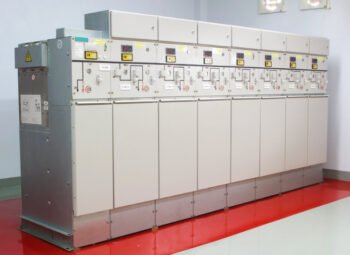
The PLC-based smart switchgear panel is an advanced electrical control and protection system that combines switchgear panel functions with programmable logic controller automation. Such panels are designed to manage, control, and alter the electrical power distribution.
Compared with conventional switchgear panels, which perform only basic switching and fault protection, PLC-based smart switchgear panels use programmable control logic to automate electrical operations. A PLC is also known as the control brain of the panel because it receives data from sensors, relays, breakers, and other connected devices. These are commonly used in manufacturing plants, commercial buildings, utilities, process industries, and critical infrastructure.
Why Traditional Switchgear Struggles in Automated Environments
Traditional switchgear panels are suitable for basic protection and switching tasks, as they offer fully manual control and fixed operating conditions. Such devices pose a practical limitation for modern industries that require automation, faster response times, and smarter system management. To understand why automation is important, it is essential to understand switchgear panels and their core operating principles.
Many traditional systems depend on manual control, fixed relay systems, and operator involvement. This system is implemented in smaller, simpler setups. But in industries where operations are more complex and require automated decision-making, such systems become inefficient. Today’s industries need better load control. The commercial buildings need remote monitoring. The process industries need automated electrical coordination, and large factories require fast fault response. Traditional switchgear panels struggle because they are not built for such smart automation.
Here are some common problems with traditional switchgear panels:
- Delayed fault response
- Limited Remote Access
- Limited flexibility when operating conditions change
- Minimal performance monitoring
- Fixed operating sequence
- Difficult troubleshooting
- Limited integration with automated systems
PLC-Based Switchgear vs Conventional Control Systems
The PLC-based switchgear panels offer a much more flexible and intelligent approach compared to conventional control systems. The old traditional switchgear panels are designed for fixed operations and manual supervision, while the PLC system can easily adapt to changing electrical conditions. Such acts make it more suitable for the industries that need remote monitoring, automated control, and easier system upgrades.
Here is a comparison between the features of a traditional switchgear panel and the PLC- Based smart switchgear panel:
| Features | Traditional Switchgear Panel | PLC-Based Smart Switchgear Panel |
| Control Logic | Fixed relay logic | Programmable automation logic |
| Remote Monitoring | Limited | Fully remote |
| Fault Response | Reactive | Automated intelligent response |
| Operational Flexibility | Low | High |
| System Integration | Restricted | SCADA and automation-ready |
| Event Diagnostics | Limited | Advanced event tracking |
| Sequence Automation | Manual or fixed wiring | Fully Programmable |
| Scalability | Complex upgrades | Easy expansion and upgrades |
This comparison helps you to understand why industries are moving towards the PLC-based smart switchgear panels.
The Role of PLC in Smart Switchgear Panels
The PLC acts as the best decision-making tool, offering a flexible control architecture that can be easily programmed, modified, scaled, and integrated with broader automation systems. For instance, the PLC-based switchgear panel can automatically detect abnormal voltage conditions, trigger breaker isolation, initiate backup source switching, activate alarms, and communicate with the SCADA system.
The key PLC-driven functions within the switchgear panels include:
- Ult detection and isolation logic
- Automated load sequencing
- Transfer switching automation
- Breaker interlocking logic
- Generator synchronization control
- Load shedding coordination
- Alarm management
- Communication handling
- Energy monitoring integration
- Process interdependency control
As discussed earlier, PLCs are adaptable and can be customized to specific industrial requirements, rather than relying on a one-size-fits-all control architecture. This is the main reason why the PLC-based smart switchgear panel is widely preferred in industries.
Core PLC Components in Smart Switchgear Panels
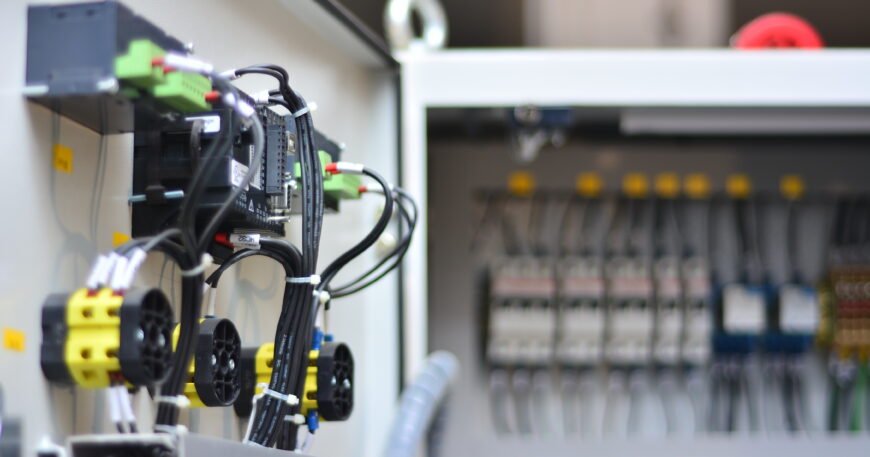
The performance of the PLC (Programmable Logic Controller)-based switchgear panels depends entirely on the operation of the components within the system. Every component plays an integral role in monitoring, protection, communication, and automated control. Taken together, the components create an electrical system.
Key Components of PLC-Based Switchgear Panel and Their Functions
| Component | Function |
| Digital Protection Relays | They detect electrical faults such as overloads, short circuits, and abnormal voltage conditions. |
| Programmable Logic Controller (PLC) | This component serves as the main control unit, processing data and automating operations. |
| Circuit Breakers | These protect the system by interrupting electrical faults when needed. |
| Human-Machine Interface | It allows the operators to monitor and control the system. |
| Communication Modules | It enables data exchange between the PLC, SCADA system, and remote monitoring platforms. |
| Current and Voltage Sensors | It helps to continuously measure the electrical conditions and send the real-time data to the PLC. |
| Alarm Systems | It helps notify operators of abnormal conditions or faults. |
| Automatic Transfer Switch | It supports automatic switching between main power and backup power sources. |
SCADA (Supervisory Control and Data Acquisition) Integration and Intelligent Industrial Control
The PLC-based smart switchgear panel becomes more valuable when integrated with SCADA-based power management systems. The electrical infrastructure can no longer work as a separate part of operations. So the PLC-based switchgear fits perfectly in such an environment. They manage the automated control actions, while the SCADA provides centralized monitoring, reporting, alarms, and remote control. When combined, they create a smart automation system.
The combination of PLC and SCADA helps operators monitor real-time electrical performance, remotely check breaker status, review fault history, control switching operations, monitor energy consumption, manage alarms centrally, improve fault response speed, and coordinate with electrical systems more efficiently.
Industries Benefiting Most from PLC-Based Smart Switchgear
PLC-based smart switchgear panels are widely used in many industries, as their value is increasing in such sectors where automation, uptime, and fast decision-making are critical. Here are some industrial sectors where PLC-based switchgear panels matter.
| Industry Sector | Why PLC-Based Smart Switchgear Matters |
| Manufacturing | It helps support automated production lines with reliable power control. |
| Textile Industry | The PLC helps to manage changing machine loads and energy efficiency. |
| Pharmaceuticals | It maintains stable power for sensitive equipment and controlled processes. |
| Data Centers | It improves uptime through automated backup switching and fault response. |
| Food Processing | In this industry, PLCs reduce downtime in a continuous production environment. |
| Oil and Gas | In this sector, PLC supports automation in complex electrical networks. |
| Hospitals | They protect the critical equipment with fast automated responses. |
| Commercial Buildings | It helps improve centralized electrical monitoring and energy management. |
| Logistics and Warehouse | It supports uninterrupted automated operations. |
Why PLC-Based Smart Switchgear is a Future-Ready Investment
As with each passing day, industrial operations are getting smarter, faster, and more connected. The businesses are investing more in automation, remote monitoring, and energy efficiency to improve long-term performance. Here are the PLC-based smart switchgear panels. The traditional system cannot expect such an upgrade system.
Benefits of PLC-based switchgear panels include reduced downtime losses, lower maintenance costs, battery energy management, extended equipment life, faster fault response, and easier future expansion. For making businesses successful and planning long-term infrastructure improvements, PLC-based switchgear panels offer both technical and financial value. Businesses investing in electrical infrastructure should also consider compliance with the internationally recognised IEC electrical safety standards.
Conclusion
PLC-based smart switchgear panels are transforming the entire industrial system by managing electrical power through a combination of traditional protection systems and intelligent automation. From manufacturing plants and commercial facilities to healthcare infrastructure, data centers, and industrial automation projects, such systems offer a long-term solution for smarter power management.