
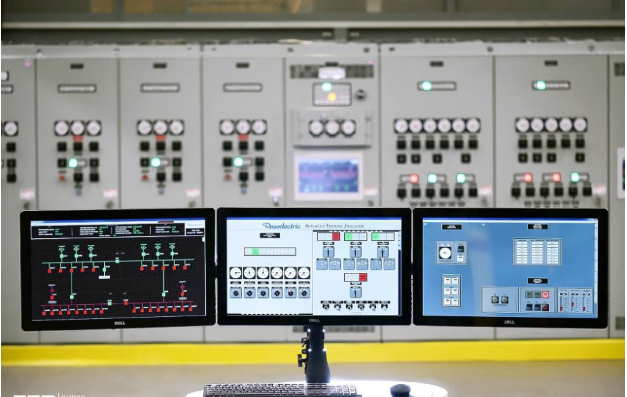
As the industry grows day by day, automation has become a necessity rather than a luxury. Businesses across manufacturing, power distribution, oil and gas, and many industrial plants are adopting smart technologies to improve efficiency. One of the best ways to achieve this goal is through the SCADA integration with switchgear panels.
The SCADA system helps operators monitor and control all electrical equipment. Switchgear panels protect and manage the electrical distribution system. When these two technologies are combined, they help businesses improve safety, enable faster fault detection, and provide smarter control over operations.
What is SCADA?
SCADA stands for Supervisory Control and Data Acquisition. It is a control system used to monitor and manage the industrial equipment and processes in real time. A SCADA system usually has the following:
- Programmable Logic Controller (PLC)
- Human Machine Interface (HMI)
- Remote Terminal Units (RTU)
- Monitoring Software
- Data Servers
- Communications Networks
One of the main purposes of SCADA is to collect operational data from equipment and enable technicians and operators to supervise the system remotely. For instance, an engineer can view the live system status from the computer screen, receive alerts, and even perform necessary control actions remotely. So instead of physically checking every terminal panel, they can view all the actions remotely.
What is SCADA Integration with Smart Switchgear Panels?
A SADA integration with the smart switchgear panels connects the electrical switchgear systems to a centralized monitoring and control platform. The integration of real-time monitoring, remote control, alarm notification, historical data analysis, performance reporting, and fault diagnosis. In short, the switchgear panels become smart.
So instead of manual checking, the operators can check the breaker status and meter readings remotely. The SCADA system automatically gathers and displays all this information. Examples of monitored parameters include voltage, current, power factor, frequency, breaker open/close status, temperature, fault alarms, and energy consumption.
Why SCADA Switchgear Integration Matters
Many industrial operations depend entirely on uninterrupted electrical performance. So a minor electrical failure can disrupt production schedules, damage equipment, and create safety concerns. SCADA integrations help businesses and industries move from reactive electrical management to proactive operational control.
- Real-Time Monitoring: The most beneficial benefit of SCADA monitoring and industrial control systems for switchgear panels is instant operational visibility. Operators continuously monitor the live electrical load, breaker conditions, fault activity, voltage stability, equipment performance, and power quality metrics. So instead of discovering issues after the affected operations occur, the team can easily detect abnormal behavior as it develops. This system helps improve operational responsiveness and reduce uncertainty.
- Remote Accessibility: In this modern industrial environment, facilities may span multiple buildings, floors, and remote locations. With remote-monitoring switchgear, engineers can supervise the system from a central control room. This is especially valuable for multi-site factories, utility networks, commercial campuses, and industrial parks. With remote visibility, reduce dependence on manual inspection while accelerating response time.
- Faster Fault Detection: Many electrical failures occur without warning. SCADA systems help identify abnormal behavior instantly, including overvoltage events, breaker trips, phase imbalances, communication failures, overtemperature alarms, and voltage abnormalities. The faster the detection, the quicker the intervention, reducing production disruption and preventing escalation.
- Improved Safety: When remote supervision is enabled, there is reduced physical exposure; SCADA reduces direct interaction with energized systems. This is very important at high-voltage or industrial sites, where manual access may pose hazards.
- Better Energy Management: In industrial operations, energy costs are a major concern. SCADA provides detailed operational intelligence that helps organizations detect unusual consumption patterns, identify inefficient loads, optimize electrical usage, improve load distribution, and reduce unnecessary waste.
How SCADA Integration Works
It is important to understand the integration process, and it becomes very easy to break the process into the following logical steps:
Data collection
Switchgear panels consist of devices capable of producing valuable operational data. Some common data sources include intelligent protection relays, digital energy meters, sensors, current transformers, voltage transformers, and auxiliary contacts. These devices help generate the raw electrical information that reflects the equipment’s performance.
Communication Layer
All the collected data must be moved towards the SADA platform. As it transforms the communication infrastructure using industrial protocols, the examples include Modbus RTU, Modbus TCP/IP, Profibus, and EtherNet/IP. The protocol selection also depends on the complexity of the infrastructure, compatibility, and performance requirements.
Controller Processing
The PLC or RTUs process incoming field data before forwarding it to the SCADA servers. These controllers help to normalize the data, interpret field signals, execute logic functions, and enable remote command pathways. These servers are an intelligent pathway between field devices and monitoring platforms.
SCADA Software Display
The software layers transform raw data into an understandable version. Operators can access the mimic diagrams, alarm screens, trend charts, event logs, performance dashboards, and equipment summaries. All well-designed interfaces help improve decision-making speed.
Control Commands
SCADA takes the authorized control actions when the operational designs permit. Examples of such cases include breaker open/close commands, alarm acknowledgements, reset instructions, and load transfer actions. This helps to create the complete pattern of monitoring and supervisory control ecosystems.
Common Challenges in SCADA Integration
There are technical challenges even in successful automation projects.
- Compatibility Issues: Traditional switchgear often lacks communication capabilities. They need retrofitted relays, protocol converters, and additional gateways. So modernization planning becomes essential.
- Network Reliability: The communication instability can undermine system confidence. There are many scenarios in which such situations occur, such as poor cabling, signal interference, inadequate switches, and weak network design.
- Cybersecurity Risks: Numerous interconnected electrical systems require robust protection. Threat mitigation includes access controls, firewall protection, secure authentication, segmented networks, and software path management.
- High Initial Investment: Infrastructure modernization requires capital investment. That is why the organization should evaluate lifecycle value rather than the upfront cost alone. To justify the expense, reductions in downtime and operational inefficiencies, along with improved maintenance performance, are needed.
Conclusion
SCADA integration with switchgear panels is undoubtedly transforming how organizations manage electrical infrastructure. So rather than relying on manual inspection, businesses can gain continuous visibility, faster diagnosis, improved safety, and smarter operational control. For organizations seeking modernization, efficiency, and intelligent electrical automation, this has become essential.


1 Comment
How Switchgear Panels Protect Industrial Equipment from Costly Electrical Failures
June 2, 2026[…] digital switchgear solutions are increasingly integrated with SCADA (Supervisory Control and Data Acquisition) systems to improve operational visibility and control. SCADA integration allows the operators to monitor […]