
QUICK REFERENCE FACTS — Indoor Ventilation Standards
| Governing standard | ASHRAE 62.1 (commercial/institutional) and ASHRAE 62.2 (residential) |
| Minimum residential ventilation rate | 0.35 air changes per hour (continuous mechanical ventilation) |
| Standard office ventilation requirement | 5 CFM per person plus 0.06 CFM per square foot of floor area |
| Typical office air changes per hour | 4 to 6 ACH |
| Classroom air changes per hour | 6 to 8 ACH |
| Restaurant and kitchen air changes per hour | 8 to 25 ACH |
| Hospital operating room air changes per hour | 15 to 25 ACH (per ASHRAE 170) |
| Industrial workshop air changes per hour | 6 to 10 ACH |
| Welding shop air changes per hour | 10 to 20 ACH |
| Breathing zone airflow formula | Vbz = (Rp x Pz) + (Ra x Az) |
| Acceptable indoor air quality definition (ASHRAE) | no harmful contaminants, with 80% or more of occupants reporting no dissatisfaction |
| Time spent indoors by average person | up to 90 percent |
| Cognitive performance impact of poor IAQ | can decrease by up to 50 percent (per published IAQ research) |
We rarely notice air when it works well. Problems appear only when something feels off. Rooms feel heavy. Focus drops. Comfort fades. Over time, these signals typically trace back to a single issue: Proper ventilation. We see this pattern repeatedly across indoor environments. When airflow receives the same planning attention as structure and power, spaces remain healthier, more stable, and easier to operate long term.
What Is Proper Ventilation and How It Works
At a practical level, proper ventilation is about control. We decide how much fresh air enters, where it moves, and how it exits. This control happens through natural openings or mechanical systems. During real projects, airflow rarely behaves exactly as depicted in drawings. Small imbalances travel far. When air changes per hour fall short, comfort suffers first. Balanced ventilation keeps indoor behaviour predictable, which matters more than most realise.
Impact of Ventilation on Indoor Air Quality
Indoor air quality shifts quietly throughout the day. Without proper ventilation, contaminants remain present longer than expected. Carbon dioxide increases as occupancy rises. Dust and allergens stay suspended. We often notice improvement after minor airflow corrections. Fresh air circulation dilutes pollutants gradually, not instantly. That steady exchange supports breathing comfort and keeps indoor environments feeling usable rather than tiring.
Common Indoor Air Pollutants Without Adequate Ventilation
Invisible accumulation is permitted by poor airflow. Mould spores, dust, formaldehyde and domestic chemicals persist. We usually encounter this during site reviews of tightly sealed spaces. Over time, exposure increases. Occupants sense discomfort before measurements confirm it.
Moisture Control and Mould Prevention Through Ventilation
Moisture moves with air. Cooking, cleaning, and daily activities constantly release water vapour. Without proper ventilation, humidity settles where airflow weakens. Condensation follows. We design systems to remove moisture before it becomes visible. Once dampness appears, damage often accelerates quietly. Consistent airflow keeps surfaces dry and indoor conditions balanced.
Health Risks Linked to Excess Moisture and Poor Airflow
On the moisture, there is moulding. The symptoms do not manifest often. We observe progressive tendencies rather. Sensitisation of asthma. Persistent irritation. Recurrent respiratory complications. Proper ventilation system can help minimise such risks by reducing the exposure over time and not responding to the problems that arise.

Role of Proper Ventilation in Thermal Comfort and Temperature Control
Comfort is not determined by temperature only. The circulation of air is as important. This is achieved by proper ventilation to get rid of trapped heat and to spread out conditioned air evenly. There are no airflows, purses of heat. Complaints follow. During commissioning, airflow adjustments often resolve temperature issues faster than equipment changes. Balanced ventilation supports comfort without pushing systems harder than necessary.
Benefits of Fresh Air on Focus, Productivity, and Well-being
When one is in the fresh air, the clarity of the mind is more than one would think. Proper ventilation helps in eliminating fatigue and promotes sustained attention. We also result in poor airflow in workplaces in relation to the symptoms of Sick Building Syndrome. Closed spaces are made to get lighter when there is equal occupancy and ventilation. Individuals are more focused. Pain is not considered distracting and thereby enhances day-to-day performance.
Ventilation Requirements for Residential and Commercial Buildings
Every building behaves differently. Homes, offices, and schools demand distinct approaches. We design systems that align with regulations and actual use. Proper ventilation balances safety, comfort, and compliance. During planning, we look beyond minimum standards and focus on how spaces operate across full occupancy cycles.
Importance of Professional Ventilation Design and Assessment
Ventilation only performs as well as its calculations. We assess airflow paths, system sizing, and operational conditions. HVAC engineers and ventilation consultants test performance in real scenarios. Accurate assessment prevents uneven airflow and unnecessary energy loss.
Professional Ventilation Solutions by Bilal Switchgear Engineering
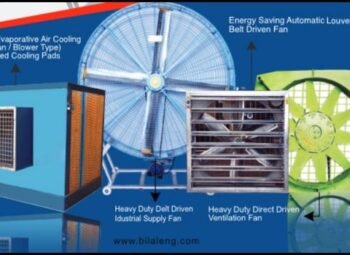
At Bilal Switchgear Engineering, we treat ventilation as a working system, not a checklist item. We design based on how spaces behave over time. Our ventilation system solutions focus on airflow accuracy, durability, and compliance. Through coordinated planning, we support healthier indoor environments across varied projects.
FAQs
1. What is ventilation in the buildings concerned?
Ventilation helps us to bring fresh air into a place with stale indoor air. It is this exchange that keeps the moisture under control, the pollutants down and the indoor conditions consistent.
2. What is the impact of ventilation on indoor air quality?
Airborne contaminants and carbon dioxide are diluted by ventilation. It restricts the duration of exposure and helps to stay within the acceptable level of indoor air quality.
3. Is there any health problem that is brought about by poor ventilation?
Yes. Poor airflow exposes one to polluted air and moisture. In the long run, such exposure leads to respiratory discomfort and irritation.
4. Is natural ventilation superior to mechanical ventilation?
Both have roles. Mechanical ventilation is used in situations where the natural air flow is not able to offer consistent and controlled air exchange.
5. What is the frequency of inspection of ventilation systems?
The frequency of inspection is based on the use of the system. Frequent evaluations ensure that the balance of airflow is evaluated and the performance problems are detected at an early stage.
6. Are the standards of ventilation in homes and offices different?
Yes. The conditions depend on the type of occupancy and use. Our system design is done to suit the Standard and operational requirements.