

Bilal Switchgear Engineering provides high-end electrical solutions. Efficient power distribution relies on the right components. You need a system that handles heavy loads without failing. That is where busbars come in. These metallic strips carry more power than standard cables. They are the backbone of modern switchgear and industrial panels.
What is a Busbar?
A busbar is a solid metallic strip or bar. It conducts electricity within a switchgear or power board. Most are made of copper or aluminum. These bars collect power from incoming feeders. Then, they distribute it to outgoing circuits. It is a much cleaner way to manage high current.
Using a busbar system reduces the mess of wires. It makes the electrical panel look organized. It also allows for easier maintenance in the future. You can bolt new connections directly onto the bar. This flexibility is vital for growing industrial plants in Pakistan.
Why Busbars are Essential in Industrial Systems
Power efficiency is a major concern for any factory. Solid conductors have lower resistance than bundled wires. This means you lose less energy as heat. It also prevents significant voltage drops across the system. Reliability stays high even during peak operational hours.
Safety is another big factor here. A busbar has a rigid structure. It stays in place during short circuits. This prevents wires from whipping around and causing fires. It also saves a lot of space inside the enclosure. You get more power in a smaller footprint.
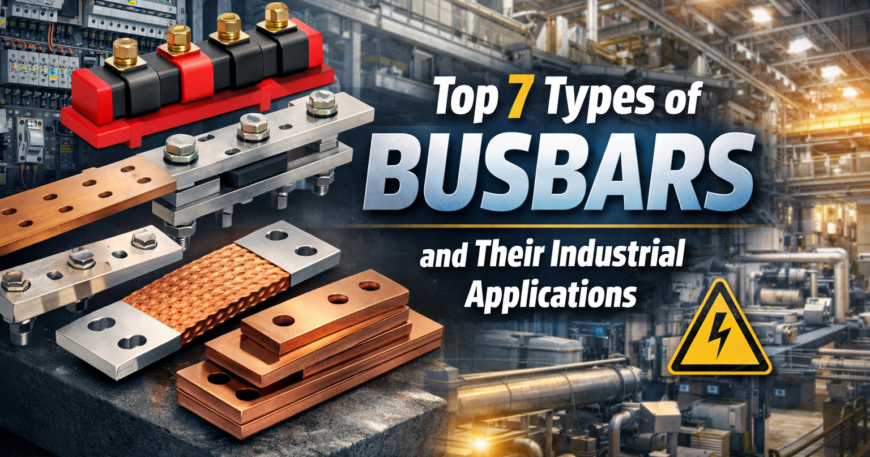
1. Copper Busbar
Copper is the gold standard for conductivity. It has high tensile strength. This means it does not deform easily under heat. Most high-voltage applications require copper. It handles thermal expansion very well. This makes it a top choice for industrial power distribution.
These bars are often used in Power Control Centers. They resist corrosion better than other metals. This longevity reduces the need for frequent replacements. While the initial cost is higher, the performance justifies it. It is the most reliable material for heavy industry.
2. Aluminum Busbar
Aluminum is a popular alternative because it is lightweight. It is much easier to install in large-scale buildings. The cost is also lower than copper. This makes it ideal for commercial projects with tight budgets. It still offers good conductivity for most needs.
You will find these in shipyards and large malls. They are flexible enough for complex layouts. However, they require larger cross-sections to match copper’s capacity. Special coatings are used to prevent oxidation at the joints. It is a practical choice for many installations.
3. Flat Busbar
Flat bars are the most common shape used today. They have a large surface area for heat dissipation. You can stack them to increase current capacity. This makes them very easy to customize for specific panels. They fit perfectly in standard switchgear designs.
Most substations rely on these rigid structures. They are simple to bolt together. You can also drill holes for easy tap-offs into the busbar system. Their flat profile helps in maintaining a slim panel depth. This is useful when floor space is limited.
4. Round Busbar
Round bars are cylindrical and often hollow. This shape helps manage the skin effect in AC circuits. Electricity tends to flow on the outer surface of a conductor. A hollow tube uses material more efficiently. It provides great mechanical strength against wind and ice.
These are mostly seen in outdoor high-voltage switchyards. The smooth surface prevents corona discharge. It reduces electrical noise and interference. Round shapes are excellent for long spans between supports. They keep the circuit stable and safe.
5. Flexible (Flexi) Busbar
Flexible types consist of thin laminated strips. They are covered in high-quality insulation. You can bend or twist them by hand. This is perfect for tight spaces where rigid bars cannot fit. They absorb vibrations from heavy machinery.
These are great for connecting transformers to panels. A flexible busbar acts as a bridge that handles thermal movement. You do not need specialized bending tools for these. They simplify the assembly of complex automation cabinets. Flexibility saves time during the installation process.
6. Single-phase Busbar
Single-phase systems are found in smaller setups. They usually have a live and a neutral conductor. You see them in office lighting panels and homes. They manage lower power levels compared to industrial types. They are simple and very cost-effective.
These units help distribute power to individual breakers. They replace the need for many small jumper wires. This makes the distribution board much safer. It is the standard for residential electrical safety. Most small businesses use this setup for basic operations.
7. Three-phase Busbar
Industrial plants require three-phase power for heavy motors. This system uses three live conductors and one neutral. It carries much higher loads than single-phase versions. Most large commercial buildings use a three-phase busbar for HVAC and elevators.
These systems are designed for continuous heavy-duty use. Proper spacing between the bars prevents electrical arcing. It is the most efficient way to run a modern factory. Reliability is the main goal here. It provides the necessary power for heavy machinery.
Key Industrial Applications of Busbars
Data centers use these systems for uninterruptible power. They need constant energy to keep servers running. Hospitals also rely on them for life-saving equipment. Any failure there would be catastrophic. The rigid design ensures the power stays on.
Railways and metro systems use them for traction power. They handle the massive surges needed to move trains. You will also see them in large power plants. They manage the output from generators to the main grid. They are everywhere in modern infrastructure.
Best Practices for Installation and Maintenance
Correct installation is the only way to ensure safety. Joints must be tightened to specific torque levels. Loose connections cause heat and eventual failure. Periodic thermal scanning helps find hot spots early. This prevents unexpected shutdowns in the middle of production.
Insulation and guarding are necessary to prevent accidental contact. Always follow international electrical standards during setup. Keeping the bars clean from dust is also important. A well-maintained busbar system can last for decades. It is an investment in your facility’s future.
Bilal Switchgear Engineering provides technical expertise in power systems. Our team delivers high-quality components for every industrial need. We prioritize safety and international standards for all our clients. Contact us to upgrade your electrical infrastructure today.
FAQs
What are the Essential Parameters to Simulate in a Busbar?
You must check the temperature rise and short-circuit strength. It is also vital to simulate the voltage drop across the length.
Which material is better for busbars: copper or aluminum?
Copper is better for conductivity and durability in small spaces. Aluminum is better if you need to save money and reduce weight.
What are the main types of busbars used in industries?
The most common types are copper, aluminum, flat, and flexible bars. Three-phase systems are the standard for industrial power distribution.
Where are flat and flexible busbars commonly used?
Flat bars go into switchgear and substations for rigid connections. Flexible bars are used in tight spaces or where machines vibrate.
What is an electrical busbar?
It is a metallic bar that carries a high current of electricity. It acts as a common connection point for multiple circuits.
What is the difference between a terminal strip and a busbar?
A terminal strip connects individual wires for low-power control. A busbar handles massive amounts of power for the main system.
What role does the busbar play in an electrical system?
It simplifies power distribution and improves system reliability. It also reduces energy loss and makes the panel safer to use.