

Most homes feel fine until you spend enough time inside them. At first, nothing seems wrong. Then small things start to stand out. The air feels heavy in the evenings. Allergies linger longer indoors. Windows stay closed, yet rooms feel stale. We usually realise later that indoor air quality does not fail loudly. It fades quietly when systems keep running without awareness. Automation changes that by helping homes respond instead of ignoring what is happening.
What Is Home Automation?
Home automation allows systems to make small decisions on their own. Sensors notice changes. Devices react without being told every time. Heating, ventilation, and filtration stop working separately. We often feel the difference before we can explain it. Homes feel steadier. Temperatures fluctuate less. Air movement feels more natural because systems react as conditions change, not hours later.
Key Components of Smart Air Quality Solutions
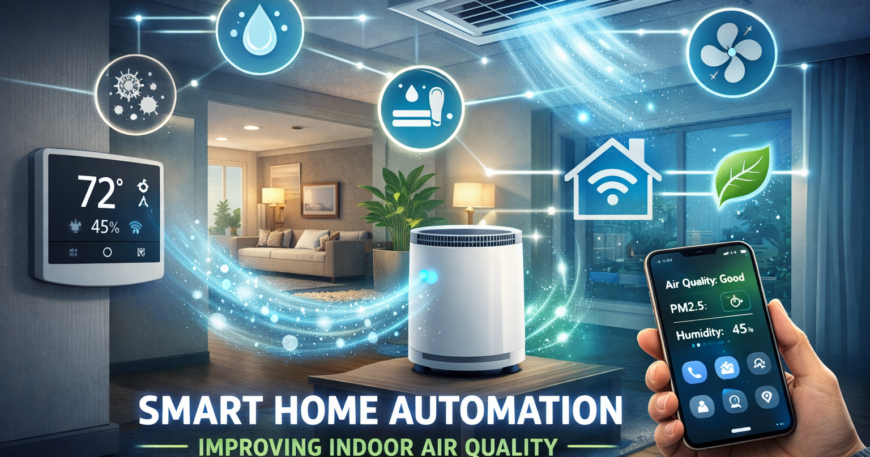
Good air does not come from one device. It comes from systems working together. Thermostats, purifiers, and HVAC equipment share information. Each does less work alone. Together, they maintain balance. Automation removes the need to guess and replaces it with a gradual response.
Smart Thermostats
Smart thermostats pay attention to humidity as much as temperature. They make smaller adjustments instead of sudden shifts. We often notice comfort improves when systems stop chasing extremes. This control quietly protects indoor air quality while keeping energy use in check.
Automated Air Purifiers
Air purifiers work best when they know when to act. Sensors detect dust, allergens, and pollutants. Filtration turns on only when needed. This approach improves indoor air quality without the constant hum of equipment running all day.
Integrated HVAC Systems
HVAC systems touch every room. When automation guides airflow, circulation becomes more even. HEPA filters and UV support the cleaner movement of air. Over time, this coordination helps stabilise indoor air quality across living spaces.
Benefits of Home Automation for Indoor Air Quality
Automation changes comfort in ways people notice slowly. The air feels lighter. Smells disappear faster. Breathing feels easier without effort. We often hear people say their home feels calmer. Better indoor air quality also means systems stop running when nothing needs attention, which naturally reduces waste.
Implementing Home Automation in Your Home
Automation works best when introduced with restraint. Not everything needs upgrading at once. We usually see better results when systems grow together over time. This approach allows devices to integrate naturally without disrupting daily routines.
Choosing the Right Devices
Not every product suits every space. Sensor placement matters. Room size matters. Compatibility matters. The right combination protects indoor air quality without creating unnecessary complexity.
Installation and Maintenance
Installation shapes long-term behaviour. Devices need correct positioning to respond accurately. Filters need cleaning. Software needs updates. These small habits keep systems reliable. Consistent care supports indoor air quality without constant attention.
Advanced Features and Future Trends
Automation continues to change quietly. Systems now learn patterns instead of following rigid schedules. Connected devices improve timing rather than control. We see value in solutions that adjust gently, without drawing attention to themselves.
Moving Toward Healthier Living Spaces
Smart automation works best when it follows daily life instead of forcing behaviour. Comfort improves when systems respond naturally. At Bilal Switchgear Engineering, our automation services focus on practical integration that supports healthier living without unnecessary complexity.
FAQs
How does automation help manage air conditions indoors?
We use automation to respond to humidity, pollutants, and usage patterns. Systems adjust airflow and filtration automatically, helping maintain stable conditions without constant manual control.
Can automated systems help reduce indoor allergens?
Yes. Responsive filtration and airflow reduce dust and allergens by acting when levels rise instead of operating continuously.
Is home automation difficult to use daily?
No. Once set up, systems operate quietly in the background. We usually only intervene for routine maintenance.
Do automation systems work with existing HVAC equipment?
In many cases, yes. Sensors and controls often integrate with existing systems without requiring full replacement.
How accurate are smart air sensors over time?
When installed correctly, modern sensors remain reliable. We rely on proper placement and calibration to maintain accuracy.
Can automation improve comfort without increasing energy use?
Yes. Systems respond only when conditions demand it, which often reduces unnecessary energy consumption.