


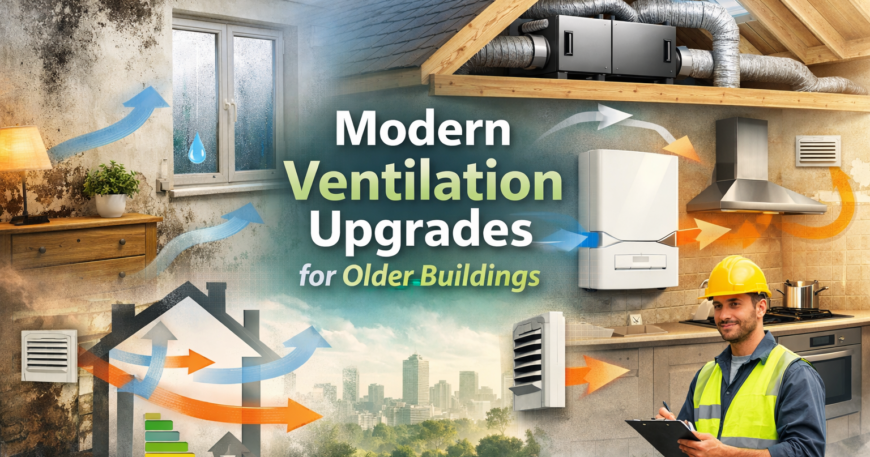
Older buildings often reveal their age through air, not structure. Rooms feel cold yet damp. Windows sweat overnight. Heating runs longer without improving comfort. When we step back, the issue usually connects to airflow. It was never designed for how the building is used today. Modern living changes moisture levels, occupancy patterns, and indoor expectations.
Why Ventilation System Upgrades Are Essential
Poor airflow creates slow problems. Black mould forms behind furniture. Cold bridges trap moisture. Heating costs increase without solving the discomfort. We often find that air has no clear path out. A modern approach improves indoor air quality, controls condensation, and supports thermal efficiency. These upgrades protect health and reduce long-term damage to the building fabric.
System Upgrade vs. New Installation
Not every building needs a full replacement. Some layouts benefit from targeted improvements. Others struggle until the airflow is redesigned entirely. We usually assess whether the existing ventilation system can be enhanced or whether partial upgrades make more sense. Single-room MVHR units, loft-mounted solutions, and improved extract fans all serve different purposes. The right choice depends on structure and usage.
Planning Considerations for Older Buildings
Retrofitting always brings constraints. Two-storey homes restrict duct routes. Built-in wardrobes limit access. Extensions change airflow patterns. We plan around these realities instead of forcing ideal layouts. A carefully designed ventilation system respects the building’s character while improving performance. Good planning avoids visible disruption later.
Understanding Legal Requirements
Ventilation work must meet regulations. Approved Document F defines airflow rates and performance thresholds. These rules apply even during partial renovations. A compliant ventilation system protects occupants and avoids approval delays. Ignoring requirements often leads to rework.
Renovation Work Triggering Ventilation Compliance
Adding rooms, installing wet areas, or replacing windows alters airflow balance. These changes often trigger compliance checks. We see delays when this link is missed early.
Background Ventilator and Air Flow Specifications
Background ventilators support continuous airflow. Their size and placement matter. Whole-dwelling rates and permeability tests confirm performance. These checks ensure the ventilation system delivers measurable results.

Approved Document F and the Future Homes Standard
Regulations continue to tighten. The Future Homes Standard targets lower emissions and higher efficiency. Ventilation plays a central role. Older buildings upgraded today must meet tomorrow’s expectations. A forward-looking ventilation system supports compliance and comfort together.
Ensuring Compliance with Expert Guidance
Expert assessment simplifies complex decisions. Qualified contractors evaluate airflow, plan upgrades, and verify outcomes. Measurement tools replace assumptions. We often see fewer issues when guidance shapes the strategy. A well-planned ventilation system reduces risk and supports long-term reliability.
Cost-Saving Tips for Ventilation Upgrades
Upgrades do not always mean high cost. Smart product selection reduces material expense. Efficient installation limits disruption. Energy savings accumulate quietly after commissioning. When chosen carefully, a modern ventilation system improves comfort without straining budgets.
Designing Ventilation Around How Older Buildings Actually Live
Ventilation upgrades in older buildings require balance. Comfort, compliance, and efficiency must align. At Bilal Switchgear Engineering, we focus on practical solutions that respect existing structures. Our ventilation system services support measured, compliant upgrades.
FAQs
Do older buildings really need ventilation upgrades?
Yes. Older buildings were designed for different living patterns. Modern usage increases moisture and indoor pollutants.
Can ventilation upgrades reduce mould problems?
Yes. Improved airflow removes excess moisture, which limits mould growth over time.
Is full replacement always necessary?
No. Many buildings benefit from targeted upgrades rather than complete replacement.
Are ventilation upgrades legally required during renovations?
Some renovations trigger compliance under Approved Document F. Early checks prevent delays.
Do ventilation upgrades increase energy bills?
Proper upgrades often reduce heating demand by improving moisture and airflow balance.
How long does a typical upgrade take?
Time depends on layout and scope. Many targeted upgrades are complete with minimal disruption.