


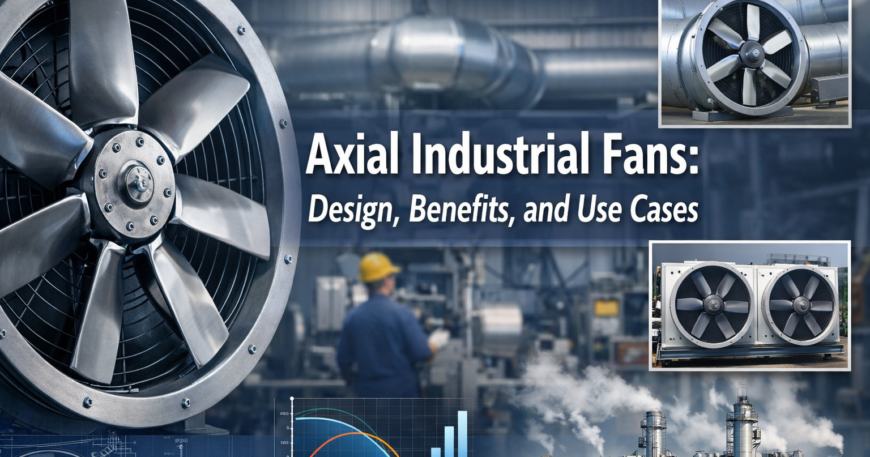
Poor airflow can turn a factory floor into a sweltering oven in no time at all. Bilal Switchgear Engineering knows that a reliable axial industrial fan is often the first thing you need to fight heat buildup. These units are built to move massive air volumes without needing a lot of effort. If you want to keep your workers cool and your machines running, you really need a solid ventilation plan in place.
Understanding Axial Industrial Fan Technology
An axial industrial fan is basically a machine that moves air parallel to the shaft it spins on. Think of a plane propeller. It pulls air in and then pushes it out in the same straight line. This linear airflow is just great for moving a lot of air when there is not much resistance or ductwork in the way.
How Axial Industrial Fans Work
The main part of the unit is the impeller. These are the blades that spin around a central hub. As they spin, they create aerodynamic lift. This lift is what pulls the air through the fan. A motor provides the power to keep the hub turning at a steady speed. It is a very simple but very effective mechanical design for any shop.
Types of Axial Industrial Fans
You will find a few different versions of these out there. Propeller fans are the most basic ones you see. Tubeaxial fans are built into a short cylinder to help focus the air better. Vaneaxial fans are even more advanced because they have extra vanes to straighten the air. This makes them better for ducted systems where you need a bit more pressure.
Design Considerations for Industrial Use
When you go to pick an axial industrial fan, the blade pitch matters a whole lot. This is just the angle of the blades. It decides how much air the fan can move. Materials are also a big deal. In a place like Pakistan, you need materials that can handle the high heat and maybe even a bit of corrosion from the humidity.
Drive Configurations: Direct vs Belt-Driven
Direct-drive fans have the motor right on the shaft. This means less maintenance for you because there are no belts to break or slip. Belt-driven fans are a bit different. The motor is separate and connected by a belt. This lets you adjust the speed by changing the pulley size. It is a bit more work to keep up, but it gives you more control over the airflow.
Axial Fans vs. Centrifugal Fans
An axial industrial fan is meant for high volume and low pressure. It moves air straight through the blades. Centrifugal fans are different. They pull air in and then throw it out at a ninety-degree angle. Centrifugal fans are better for pushing air through long, narrow pipes or vents. Axial units are better for general cooling in big, wide-open spaces.
Benefits of Axial Industrial Fans
One of the biggest perks of an axial industrial fan is that it does not use much power at all. It is very efficient for air; it moves. The design is also very compact. You can fit them into walls or small ceiling spaces without having much trouble. This helps keep your monthly operational costs down.
Industrial Applications
You see these fans almost everywhere. They are used for general ventilation in big warehouses. They help cool down large heat exchangers. Many factories use an axial industrial fan in exhaust systems to pull out old, hot air. They are also very good for removing light fumes or steam from a work area before it builds up.
Installation and Maintenance Best Practices
You need to make sure the fan is mounted very securely. Use vibration isolators so the whole building does not shake when the fan is on high. Cleaning the blades is also vital. Dust buildup can make the blades heavy and off-balance. If you use industrial bracket & pedestal fans, make sure they are placed where they can pull in fresh air.
Enhancing Efficiency with Modern Technology
Modern fans use Variable Speed Drives now. This lets the axial industrial fan slow down when the room is already cool enough. It saves a lot of electricity over a whole year. You should also look at the Fan Energy Index. It tells you exactly how much work the fan does for every watt of power it drinks.
Bilal Switchgear Engineering provides the high-quality gear needed for these tough industrial environments. A well-placed axial fan can change the entire feel of a workspace. It is a smart investment for any facility manager who cares about long-term reliability. Keeping your air moving is the simplest way to protect your equipment and your people.
FAQS
Why Are Axial Fans Essential in Air Movement Systems?
They are the most efficient way to move huge amounts of air in open areas. Without them, heat and fumes would just sit still and create a very dangerous environment for workers.
What are the perks of an axial fan?
They are small, they do not cost much to run, and they move a ton of air. They are also usually cheaper to buy than other types of heavy industrial blowers.
When should an axial fan be used instead of a centrifugal fan?
Use one when you have a lot of space and do not need to push air through long, thin vents. They are best for straight-through air movement and general cooling tasks.
What industries commonly use axial industrial fans?
You will find them in warehouses, power plants, and large industrial laundries. They are also big in the mining industry for bringing fresh air deep underground.
How do axial fans help reduce energy consumption?
Because they move air in a straight line, they do not waste energy on friction. Their simple design means the motor does not have to work as hard to get the job done.
What factors should be considered when selecting an axial industrial fan?
You need to know how much air you need to move in cubic feet per minute. Also, think about the noise level and if the fan can survive your local weather and dust.
How often do axial industrial fans require maintenance?
A quick check every few months is usually enough to keep them running. You just need to clean the blades and make sure the motor bearings are still spinning smoothly.